
The road to Dien Bien Phu makes more sense when you stop at Co Noi. Here, the story is the supply route: the people who kept roads passable and moved food, equipment and ammunition towards the 1954 battlefield. The memorial gives that often-overlooked work a place in a northwest Vietnam journey.
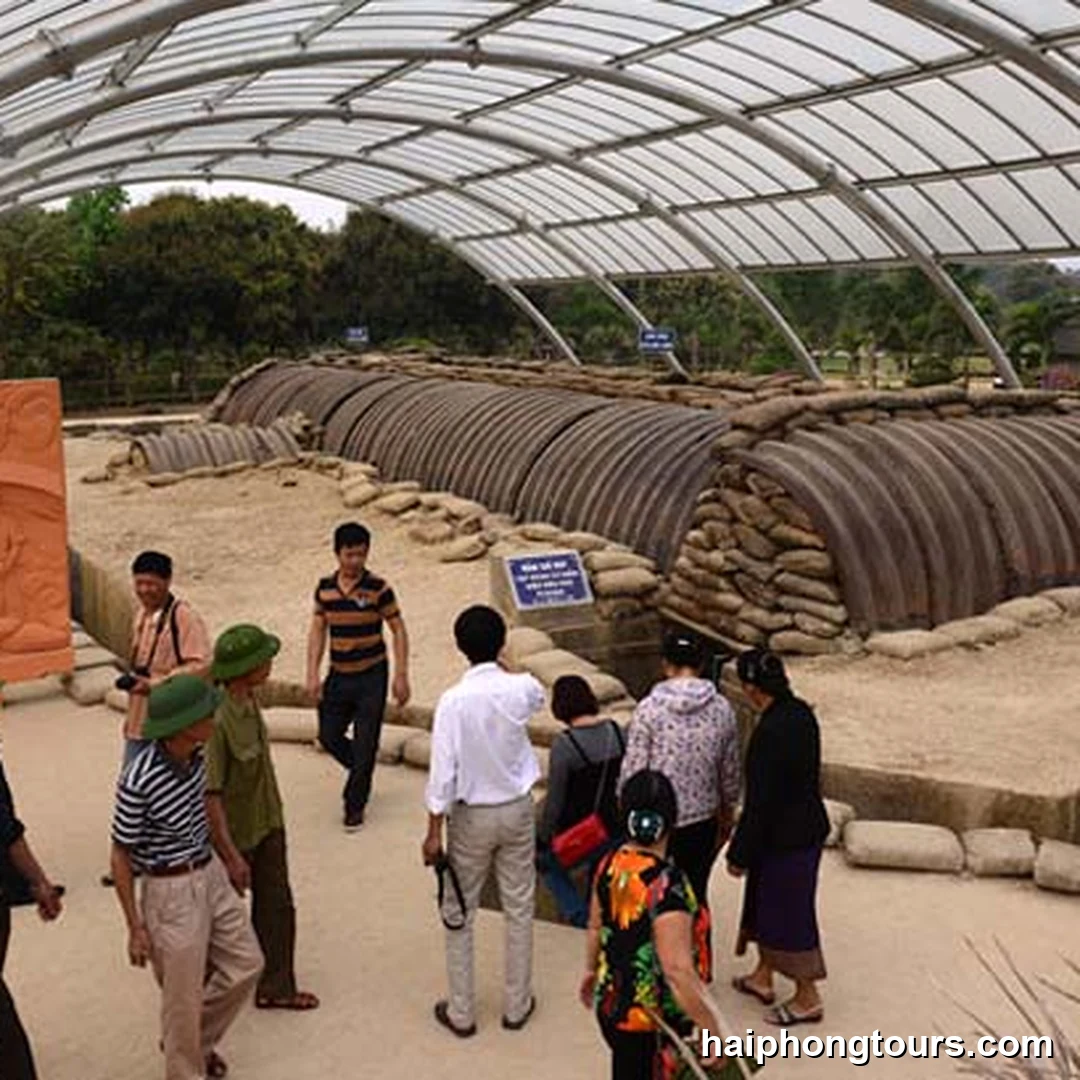
Co Noi is a practical history stop on the QL6 corridor between Moc Chau and Son La. Plan time to enter the memorial grounds, understand the monument and visit any open interpretation spaces. A photograph taken from a moving car misses the reason to stop.
The right place to ask for
Use the full name Khu di tích lịch sử Ngã ba Cò Nòi, the Co Noi junction historic site. Older directories place it in Bản Cò Nòi, Cò Nòi commune, Mai Son district; current official reporting uses Mai Sơn commune, Son La. The stable landmark is the historic junction of QL6 and QL37.
Tell your driver you want the historic-site entrance and parking area. A bus station or a roadside drop-off called Co Noi is not automatically the memorial gate. For a car journey between Moc Chau and Son La, request a named stop here when you arrange the trip.
The provincial heritage directory, published on 21 October 2024 and still publicly available when checked on 8 November 2026, lists the management contact as +84 827 007 555 and admission as free. Call to check the visit arrangements and whether any current exhibition or guide service has a separate charge. The directory does not establish opening sessions or a guaranteed English-speaking guide.
Why this junction mattered
During the Dien Bien Phu campaign, routes bringing supplies from different parts of northern Vietnam converged around Co Noi. French aircraft targeted the junction to interrupt that flow. Youth volunteers and other workers repaired damage, cleared routes and supported the movement towards the front.
This context is useful before entering the memorial. Look at the site as part of a transport network rather than an isolated battlefield. Ask yourself what happens to an army if the road behind it is repeatedly blocked. The memorial’s emphasis on labor, supply and sacrifice then becomes easier to understand.
The original commemorative monument was inaugurated in 2002, and the site received national historic recognition in 2004. Its sculptural group depicts three youth volunteers, accompanied by reliefs representing the wider effort to support the campaign. These are later commemorative works, not structures preserved unchanged from 1954.
If you are continuing to Dien Bien Phu, Co Noi adds the journey behind the battle to your later visit to the battlefield itself. It also pairs naturally with Son La’s prison history, which covers a different period and theme. Allow those distinctions to shape the itinerary instead of treating every memorial as the same kind of stop.
What is there to see now?
An official provincial report records the inauguration of phase II on 18 May 2026. That work included a 20.07-metre commemorative tower, renovation of the monument and reliefs, repairs to the two-storey exhibition building, and improvements to toilets, parking and paths. This is completed-work evidence, replacing older articles that describe those particular works as still under construction.
A sensible visit begins with the monument and reliefs, then continues into the open exhibition or memorial areas indicated by staff. Ask which spaces are staffed that day and whether a short explanation is available. The completion of a building project does not mean every room follows the same public opening hours.
July 2026 reporting describes visitors using QR interpretation at the site. Have mobile data available if you want to try it, but do not depend on a particular language or every code working. Photograph a label for later translation if permitted, and move aside while reading so others can pass.
For a first visit, allow 45–75 minutes as our planning estimate. Give it longer if you arrange a guide or want time in the exhibition spaces. If only the outside grounds are open, adjust the stop accordingly; the monument still has meaning when you arrive knowing the road’s history.
Getting there independently by bus
The provincial table dated 20 February 2025 lists route 08 from Tiểu khu 64, Nông Trường Mộc Châu, to Cò Nòi bus station (Km264+550, QL6), and route 01 from Hồng Tiên via Sơn La bus station to Thống Nhất, Cò Nòi. Full-route reference fares are VND 50,000 and VND 38,000. Contacts: 2-9 Sơn La, +84 868 378 999 / +84 943 179 966; Son La Passenger Company No. 1, +84 212 385 6868 / +84 912 158 323. Confirm the fare and stop for your stage.

Ask which approved stop serves the memorial most practically and whether a local ride is needed from it. The two route endpoints have different names, so do not assume either is beside the entrance or that you can change on the same platform. Ask for the last useful return departure, not only the first bus out.
A Vietnamese request is: “Tôi muốn tham quan Khu di tích Ngã ba Cò Nòi. Xuống điểm nào gần cổng di tích nhất? Chiều về đón ở đâu và chuyến cuối phù hợp là mấy giờ?” It asks about the historic-site gate and the return, which is more precise than simply asking for a ticket to Co Noi.
For an onward journey with luggage, a pre-arranged car is easier to use as a history stop. On a public bus, ask your hotel about storing bags until you return, or arrange a local vehicle in advance. Do not leave luggage unattended at a junction while visiting the grounds.

Fitting the stop into a northwest itinerary
Moc Chau to Son La: make Co Noi the main history pause on the travel day, then continue to your Son La hotel. You can visit the Son La Prison and Museum during its open sessions the next day rather than rushing both before closing.
Son La towards Moc Chau: stop after leaving the city, then continue to your plateau accommodation. Keep a separate allowance for lunch. A memorial visit is easier to appreciate when the group is not using it only as a hurried meal or toilet break.
Continuing to Dien Bien Phu: include Co Noi while travelling along this corridor and use the Dien Bien Phu travel guide to choose later battlefield visits. Avoid driving back from Son La just to add a stop you could have made on the way.
For the road and bus connection in either direction, see the Moc Chau to Son La transport guide.
Visiting respectfully and comfortably
This is an active place of remembrance. Give ceremonies and people offering incense room, dress respectfully and ask before close photographs of participants. You can observe quietly without buying an offering. Follow staff directions around memorial spaces and any restricted areas.
The grounds include outdoor walking and changes of level. The renovation report confirms toilets and paths were improved, but does not publish a measured accessible route. If steps or distance are a concern, ask management which part of the grounds can be reached from the current parking area before deciding the length of your visit.
Would you like Co Noi included in a Moc Chau, Son La and Dien Bien Phu journey? Contact us with your dates, overnight stops and level of interest in history. We can help allow enough time for the memorial and the road beyond it.