
There are two very different ways to go from Hanoi to Sapa: travel directly and spend your time around Sapa, or make the rice valleys part of the holiday. The second option works best when Mu Cang Chai is a place to stay and walk, not a roadside photograph between long drives.
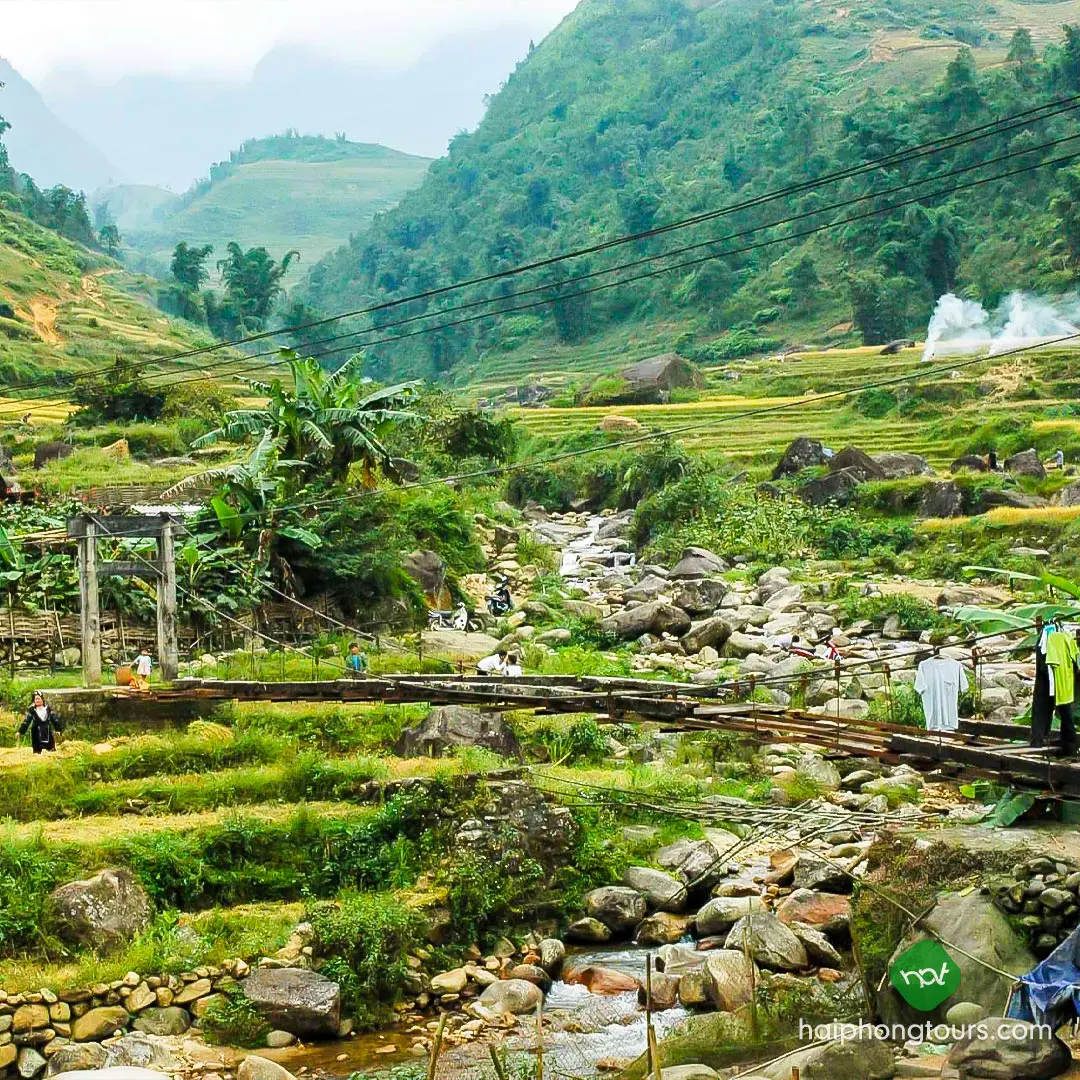
For a comfortable northbound journey, allow six days for Hanoi, Nghia Lo, Tu Le, Mu Cang Chai and Sapa, or seven days if you want a full Sapa day before leaving. Keep two consecutive nights in the Mu Cang Chai area. That creates one genuinely usable walking day and removes the need to carry your luggage through every activity.
The route and the nights that make it work
The established touring corridor runs from Hanoi to Nghia Lo, continues along Highway 32 through Tu Le and Khau Pha to Mu Cang Chai, then approaches Sapa through the Than Uyen and Tan Uyen corridor and O Quy Ho. It is not the western circuit through Sin Ho, Muong Lay and Dien Bien Phu. Trying to add those places changes the scale of the trip substantially.
The following is an independent itinerary suggestion, not a fixed departure operated by a named company. Its main design choice is the overnight pattern.
| Day | Journey and main purpose | Sleep |
|---|---|---|
| 1 | Hanoi to Nghia Lo; arrive in time for a hosted dinner rather than a second major excursion | Nghia Lo or a nearby Muong Lo village |
| 2 | Continue to Tu Le; leave the afternoon for the valley and one arranged local experience | Tu Le |
| 3 | Cross Khau Pha and reach your Mu Cang Chai accommodation; one short stop rather than a full trek | Mu Cang Chai terrace area or town |
| 4 | A dedicated terrace-walking day with a local guide, lunch and an agreed vehicle collection point | The same Mu Cang Chai accommodation |
| 5 | Continue north through the tea-growing corridor and O Quy Ho to Sapa | Sapa |
| 6 | Begin your onward journey, or stay for a full Sapa day if extending to seven days | Optional second Sapa night |
| 7, if added | Leave Sapa without attaching the departure to a full mountain-road touring day | Your next destination |
This sequence changes hotels several times, but not every night. Pack one small overnight bag for the short early stays and keep the larger suitcase organized for the two-night terrace stop.
Day 1: make Nghia Lo a real stop
Nghia Lo earns its place when you want time with the Thai communities of Muong Lo, rather than just a bed before the passes. Ban Deu and Sa Ren are established community-tourism villages. Official tourism reporting identifies Chu Van Luat as a Ban Deu host and Hoang Thi Loan as a Sa Ren host, useful names when researching a hosted stay rather than an anonymous accommodation pin.
Book the accommodation and evening meal together. A Thai family meal may include grilled fish, seasonal vegetables and local meat dishes, but the host should choose a menu that suits the party and the ingredients available. Give dietary requirements before arrival. Do not assume that every household can prepare a separate vegetarian meal after the rest of the food has been cooked.
Keep the first afternoon flexible. If the drive has gone smoothly, take a short village walk; if you arrive late, dinner and a conversation with the host are enough. Cultural performances and household visits should be arranged, not treated as an automatic nightly show.
The Nghia Lo and Muong Lo guide explains the local stay decision. For this road trip, choose one village base instead of trying to visit several similar homestays before dark.
Day 2: Tu Le without rushing the next pass
Use the move to Tu Le as a shorter touring day within the overall journey. Stop for lunch and settle into the accommodation before deciding how far to walk. The value of this night is an unhurried valley experience, not the number of viewpoints collected on the way.
If you want to understand local green rice, arrange a visit around actual production. A tasting and a working demonstration are different experiences; neither should be promised solely because the itinerary says “Tu Le.” The Tu Le green-rice guide explains that distinction and helps you ask for the right visit.
A hotel or resort stay is also a valid choice here. Do not build the day around an assumed public hot-spring pass: an overnight accommodation package, a private bath reservation and non-resident entry can have different conditions. If bathing is important, book that exact service rather than arriving with an old online price.
Have dinner near the overnight base. Adding an evening drive for a supposedly better viewpoint defeats the purpose of breaking the journey at Tu Le.
Days 3 and 4: give the terraces a full day
On day 3, cross Khau Pha and travel to the actual property entrance. “Mu Cang Chai” may mean the town, a La Pan Tan-area stay, or a lodge reached by a separate village road. The last section matters for arrival time, vehicle size and luggage handling. Give the driver the property name and its host-approved drop-off, not just the district name.

After check-in, a short orientation walk is enough. Discuss the following day’s route with the guide while there is still time to adjust it. A photographer who wants a few terrace viewpoints does not need the same outing as a confident walker seeking several hours between villages.
Reserve day 4 for the chosen walk. Specify the walking start, lunch location and vehicle finish before leaving. A route that ends at a different village needs a driver collection; returning to the same hotel does not mean returning on foot along the outward route.
For a mixed-ability family, agree a shorter route and a road-accessible exit from the beginning. Do not plan for one person to wait alone at an unstaffed viewpoint while the rest continue. Your accommodation can also be the restful alternative for someone who would rather skip the walk.
Leave the large bags in the room and carry only the day’s essentials. This is the practical reason for two consecutive nights: breakfast, walking, lunch, a shower and dinner can happen without a checkout deadline or a suitcase in a transfer vehicle all day.
Day 5: Mu Cang Chai to Sapa is a travel day
A specialist operator’s published itinerary uses approximately 160 km for the Mu Cang Chai-to-Sapa stage and follows the Tan Uyen tea-hill corridor and O Quy Ho. Treat that as route orientation, not a door-to-door guarantee: a hillside lodge and a property outside Sapa town can add meaningful access time.
Keep one optional stop, not a packed sightseeing program. A tea landscape stop is not automatically a factory tour or a producer-led tasting. Arrange the latter separately if it matters; otherwise let the driver choose a legal stopping place where passengers can get out without standing in traffic.
Have lunch before everyone becomes tired and hungry, and aim to reach Sapa with enough time to find the hotel entrance and unpack. Do not attach a prepaid late-afternoon attraction slot to an arrival time that depends on mountain-road conditions.
For the individual road leg, use the Sapa and Mu Cang Chai transport guide. The itinerary here concerns where to spend the nights; it does not replace a current quotation for the exact two properties.
One continuous driver or separately booked transfers?
A continuous private vehicle is the simpler arrangement when you want luggage continuity, roadside stops and collection after a walk. Request a quote listing all overnight bases, the included driving days, driver accommodation, tolls, parking and any waiting during activities. A local walking guide and a long-distance driver perform different jobs; do not assume one booking includes the other.
Separate transfers can work when you are comfortable spending longer in each place. Book every onward leg before relying on the plan, particularly the move from a rural lodge to Sapa. A public coach serving a town is not necessarily a service to your homestay driveway, and a seat sold for a through journey may not allow sightseeing stops.

If you use buses, simplify the itinerary rather than making it depend on several uncertain same-day connections. Fewer bases and longer stays are usually more useful than trying to reproduce a private-car itinerary with local departures.
Shortening to five days or extending to seven
With five days, the cleanest reduction is to remove an overnight base, not the full Mu Cang Chai walking day. One possible structure is Tu Le, two nights in the Mu Cang Chai area, then Sapa. The first day becomes longer and Nghia Lo becomes a meal or rest stop, so this version suits travellers who value the terraces more than the Muong Lo hosting experience.
With seven days, keep the six-day outline and add a second Sapa night. That gives you one complete day there before departure. Choose that day’s activity after considering how much walking you have already done; the whole journey need not finish with its hardest outing.
If a train from Lao Cai or a flight after returning to Hanoi is essential, organize that connection as a separate departure stage with a sensible buffer. An attractive mountain route is a poor place to build a chain of non-refundable tight connections.
Weather and rice colours: keep a route you can change
Do not buy the itinerary as a guarantee that every valley will show the same rice colour. Different elevations, planting decisions and local weather can produce different scenes during one trip. Ask a local host for recent, location-specific photographs if the farming landscape is the main reason for travelling.
When rain or poor visibility changes the road or walking plan, use a genuine alternative: stay an extra night at the current base, replace the long walk with a short host-led visit, or omit an optional stop. If a driver or local authority advises against crossing a pass, a “rainy-day itinerary” should not quietly require that same crossing.
Send Hai Phong Tours your Hanoi departure point, preferred number of nights, walking ability, luggage and final Sapa or onward destination through our contact page. We can help assess the transfer sequence and where an extra night will make the journey more comfortable.