
Ba Vang Pagoda and eastern Yen Tu are separate religious destinations in the Uong Bi area. Travel between them only after setting a firm Ba Vang exit and an exact Yen Tu hotel, reception or lower visitor endpoint that still supports the intended plan.
A road ride does not include the Yen Tu shuttle, cable sections, walking or summit time. Trying to complete a full Ba Vang visit and a full Yen Tu summit plan on the same short day can remove the safe descent and hotel margin.
Confirm the Ba Vang public pickup
Ba Vang can use dated ceremony or event arrangements, multiple visitor levels and stairs. Ask visitor reception which public vehicle point is open on the travel day. Do not order a car to an interior worship area or a generic lower-gate label.
Review the Hai Phong Tours Ba Vang visitor guide before fixing the departure time, especially when a ceremony or extra walking may delay release. The road booking should begin at the public vehicle point confirmed for that day.
Set a departure cutoff before starting the visit. Include the walk back to the lawful vehicle point, regrouping, collecting stored bags and matching the driver. The visit finish inside the pagoda is not the road departure.

Give the driver an exact eastern Yen Tu destination
Eastern Yen Tu in Quang Ninh and Tay Yen Tu use different road entrances. State the accepted eastern hotel branch, reception, lower visitor area or road base. A driver with only Yen Tu may choose the wrong side.
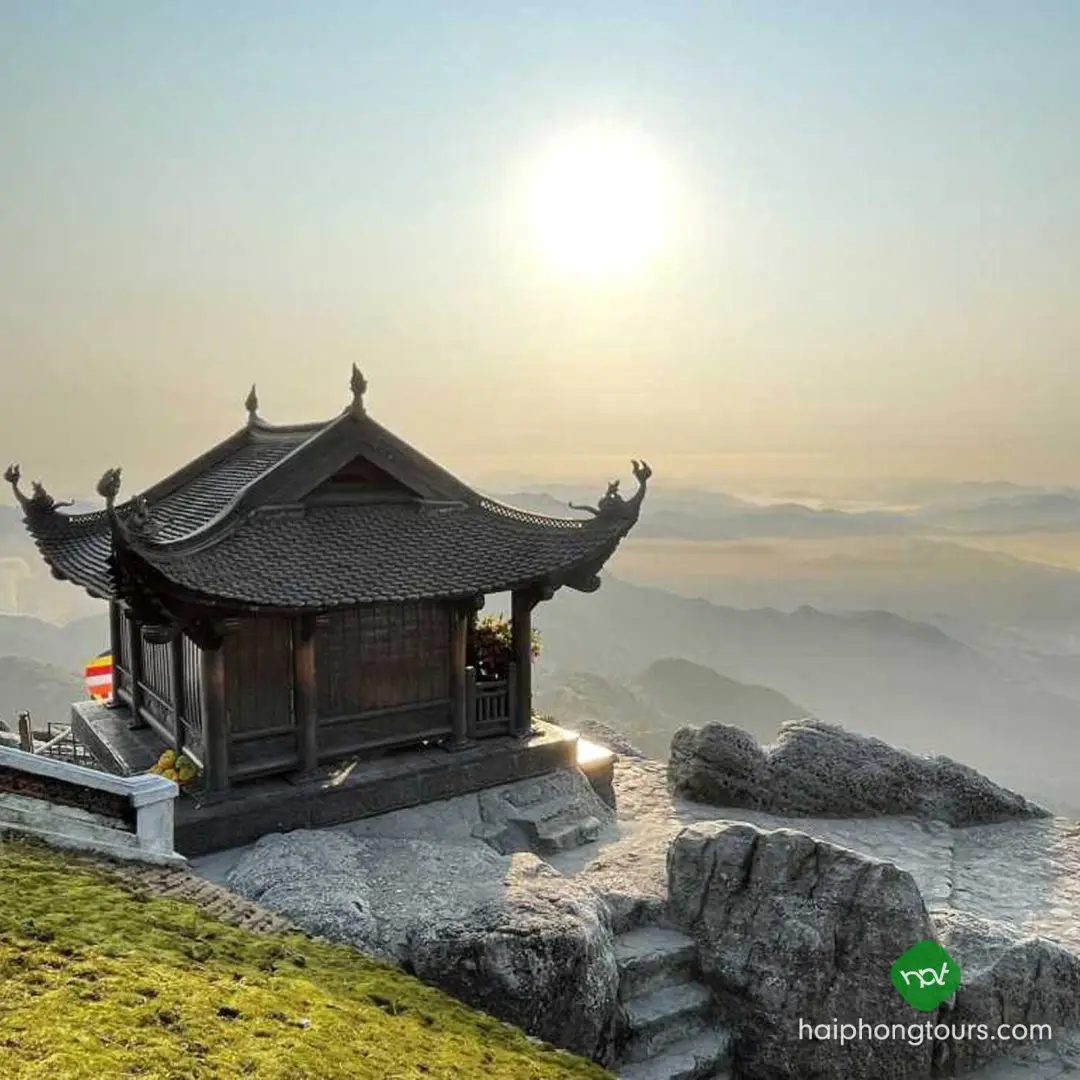
The Hai Phong Tours Yen Tu mountain guide explains the two cable sections and walking context. Confirm travel-day operation with the mountain operator separately.
If the plan ends at a hotel, check reception hours and exact lobby. If it continues to the lower visitor area, ask what mountain activity remains useful after actual arrival.
Separate the road ride from mountain access
Road arrival does not include shuttle movement, cable ticketing, queues, walking between stages or summit access. The mountain can operate differently because of weather or dated notices.
Ask whether both cable sections, a lower-area visit or only hotel check-in remains realistic. For limited mobility, choose the least demanding route that is currently available instead of assuming every stage is accessible.
Keep enough time for descent. A late summit attempt can be unsafe even when the road transfer itself was punctual.
Assign luggage custody
Decide whether bags remain at Ba Vang, stay in the assigned vehicle or go to the Yen Tu hotel. Use only a documented arrangement. Keep documents, medication and valuables with the passenger.
Count cases before leaving Ba Vang and at the final Yen Tu handoff. If the driver changes, record the replacement and transfer each bag in the presence of the group.
A staffed hotel is the safer luggage base when the second visit includes cable and walking. Do not leave cases in an unidentified vehicle at the mountain.
Set separate cutoffs for both sites
The Ba Vang exit cutoff should include the walk from the worship area to the public vehicle point. The Yen Tu arrival cutoff should include hotel or lower-area reception, ticketing, shuttle movement and the descent needed after the chosen activity.
Do not use one road estimate as the whole schedule. Event traffic can delay the first exit, and mountain weather can reduce the second plan even after the car arrives. The driver should receive both decision cutoffs in writing.
If the group leaves Ba Vang later than planned, remove a Yen Tu stage before starting the road ride. A lower-area visit or hotel check-in can still be useful. A shortened descent margin is not.
When a ceremony is the priority, protect it and treat Yen Tu as an overnight base. When the mountain is the priority, leave Ba Vang early enough that a current cable and walking plan remains realistic. Trying to protect both full visits usually creates the weakest result.
Confirm the onward finish after Yen Tu as well. A hotel, Uong Bi property or later road connection needs its own reception and luggage plan. The two-site transfer should not end at an unstaffed lower area.
Choose a realistic two-site plan
Ba Vang plus a lower Yen Tu finish suits a day when event access, road travel and mountain operation remain useful but a summit would be rushed.
Ba Vang plus a Yen Tu hotel is better after a long ceremony, event traffic, poor weather or a late departure. Begin the mountain visit later from the named base.
Set the two-site cutoff before entering Ba Vang: a late release means either a short lower Yen Tu visit or direct delivery to the named Yen Tu hotel. Do not preserve a summit target after the useful cable and walking window has already disappeared.
Failure recovery
- Ba Vang event traffic moves the exit: Follow site staff to the current public point and update the assigned driver.
- The departure cutoff is missed: Shorten Yen Tu to hotel or lower-area arrival rather than forcing a summit.
- The driver selects Tay Yen Tu: Correct to the accepted eastern Quang Ninh endpoint before leaving Ba Vang.
- Mountain operation changes: Keep only the useful hotel or lower-area plan and cancel unsupported stages.
- Luggage custody is unclear: Move bags to a staffed hotel or keep them with the recorded vehicle and group.
Departure checklist
- Ba Vang event status, lawful pickup and exit cutoff are confirmed.
- The driver and plate match the written booking.
- The eastern Yen Tu hotel, reception or lower-area point is accepted.
- Shuttle, cable, walking, daylight and weather support the intended finish.
- Every bag has a named custodian and a staffed fallback.
Would a private transfer make this journey easier? Contact us with your travel date, exact pickup and drop-off, number of travelers and bags. Include any flight, train or cruise deadline so we can assess a suitable plan and quotation.
