
Descend fully to the accepted eastern Yen Tu road point before transferring to Ba Vang Pagoda. Mountain finish, cable descent, walking, luggage retrieval and vehicle loading are separate stages. Visit Ba Vang only when current access and useful time remain.
When weather or a late descent removes that window, go to a named Uong Bi hotel and move Ba Vang to another period. A rushed religious-site visit after dark is not a successful connection.
Set the Yen Tu turnaround first
Eastern Yen Tu uses two cable sections with walking between stages. Ask the operator about current cable, shuttle and weather conditions, then set the latest safe time for starting descent.
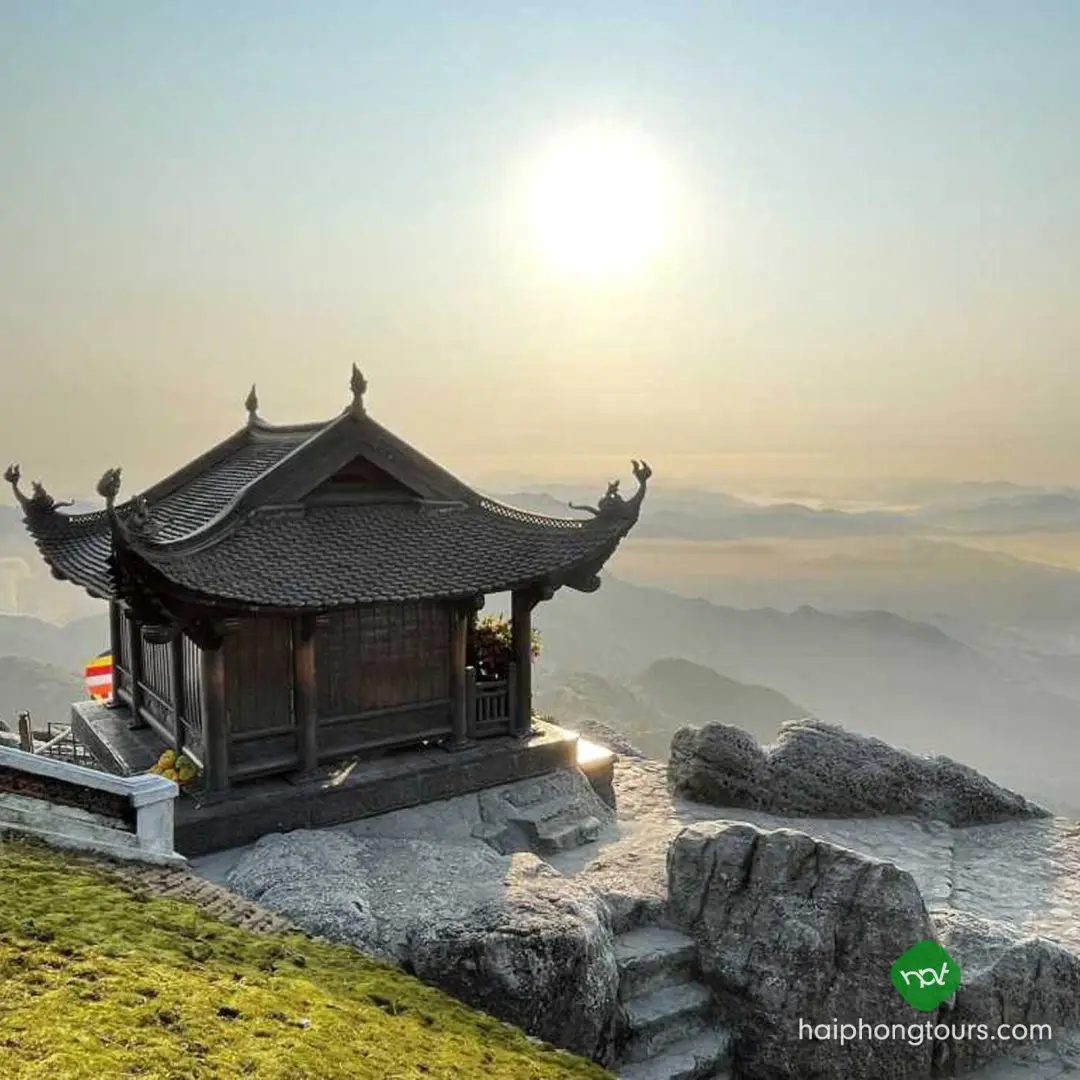
The Hai Phong Tours Yen Tu visitor guide helps explain the mountain structure. It does not include the road transfer or Ba Vang visit.
Travelers with limited mobility should choose a turnaround that accounts for walking and queues. Do not plan the road pickup from the expected summit finish.
Reach the accepted eastern road point
Eastern Yen Tu and Tay Yen Tu are different road systems. Record the Quang Ninh hotel, reception or lower visitor pickup. Share the live pin only after the group reaches that staffed point.
Collect every stored bag and count luggage before loading. Match the driver and plate. If the vehicle is reassigned, obtain the new record before handing over cases.
The road vehicle should not be called to a cable platform or interior mountain label. Allow time for the full passenger route to the lawful curb.
Check Ba Vang access on the same day
Ba Vang is a separate religious destination with dated ceremonies, multiple levels and stairs. Current event access can move the public vehicle point or change the useful visiting window.
The Hai Phong Tours Ba Vang guide provides visitor and walking context. Ask site reception which public approach is open on the travel day.
Road arrival does not remove the walk from the vehicle point. If the traveler cannot manage the current route or the site is closing, continue to the hotel instead.
Protect luggage and the onward hotel
Decide whether luggage stays in the assigned car or goes directly to a named hotel. Keep documents, medicine and valuables with the traveler. Do not leave bags with an unrecorded substitute.

Confirm the onward hotel branch, lobby and reception before entering Ba Vang. Event traffic or a long visit can change the later road plan, so the staffed fallback must be known.
Count every bag again at the final hotel. A two-site day should not end with luggage split between mountain storage, a vehicle and an uncertain reception.
Protect a respectful Ba Vang visit
Use the actual road departure from eastern Yen Tu to decide whether Ba Vang remains worthwhile. Include the walk from the public vehicle point, suitable clothing, site orientation and the return to the vehicle. Arriving near closing or during a restricted event period may leave no useful visit.
Ask site reception which areas and walking route are suitable at the expected arrival. A traveler who has already completed a mountain descent may need the least demanding route. Remove optional stairs rather than rushing a tired group.
Keep worship behavior separate from transport pressure. The driver should wait at the lawful point and should not call repeatedly while the group is inside a religious area. Agree on one contact person and a clear return time.
If the group reaches the public pickup later than planned after the visit, update the onward hotel before loading. Confirm that reception remains staffed and that the driver has the correct branch. Do not rely on a general Uong Bi pin.
A short lower-area Yen Tu plan followed by an unhurried Ba Vang visit can be more useful than a full mountain attempt followed by a rushed arrival. Choose the sequence based on current conditions and passenger ability, not the number of attractions listed.
Record the actual eastern Yen Tu departure and expected Ba Vang public-side arrival in one message. Send it to the driver, site contact and onward hotel. If conditions change, everyone should receive the same revised plan rather than relying on separate verbal estimates.
For a group, appoint one person to count passengers and luggage at Yen Tu and again after Ba Vang. This reduces the risk of leaving a bag at mountain storage or a traveler at a different site level.
Decide after full descent
Continue to Ba Vang when the group is road-ready, the public vehicle point is confirmed and enough time remains for the intended walking route.
Go to the named Uong Bi hotel after poor weather, late cable descent, event restriction or fatigue. Visit Ba Vang later from a staffed base.
After the final Yen Tu descent, use the current Ba Vang access point and the group’s real walking capacity to make the last decision. Hai Phong Tours recommends ending at the named Uong Bi hotel when event controls, rain or fatigue leave no useful and respectful Ba Vang visit.
Recovery actions
- Mountain descent crosses the road cutoff: Cancel Ba Vang and go to the confirmed hotel.
- The vehicle waits at Tay Yen Tu: Correct it to the accepted eastern pickup and remain at a staffed base.
- Ba Vang event access changes: Use only the public point named by site staff or postpone.
- The group is too tired for stairs: Choose the least demanding route or remove the visit.
- The hotel cannot confirm reception: Select another named staffed Uong Bi property before leaving Yen Tu.
Road-ready checklist
- All cable, walking and shuttle stages are complete.
- The group and bags are at the accepted eastern road pickup.
- The assigned driver, plate and custody record match.
- Ba Vang public access, useful time and walking limits remain suitable.
- A named Uong Bi hotel is confirmed if the visit must be removed.
Would a private transfer make this journey easier? Contact us with your travel date, exact pickup and drop-off, number of travelers and bags. Include any flight, train or cruise deadline so we can assess a suitable plan and quotation.
