
Hanoi changes character a few streets south of Hoan Kiem Lake. Shopfronts give way to larger plots, street-facing terraces and monumental buildings. A French Quarter walk is an enjoyable way to see that change, but it should not depend on entering every famous facade: both the historic Opera House and the National Museum of History’s Trang Tien building are affected by restoration.
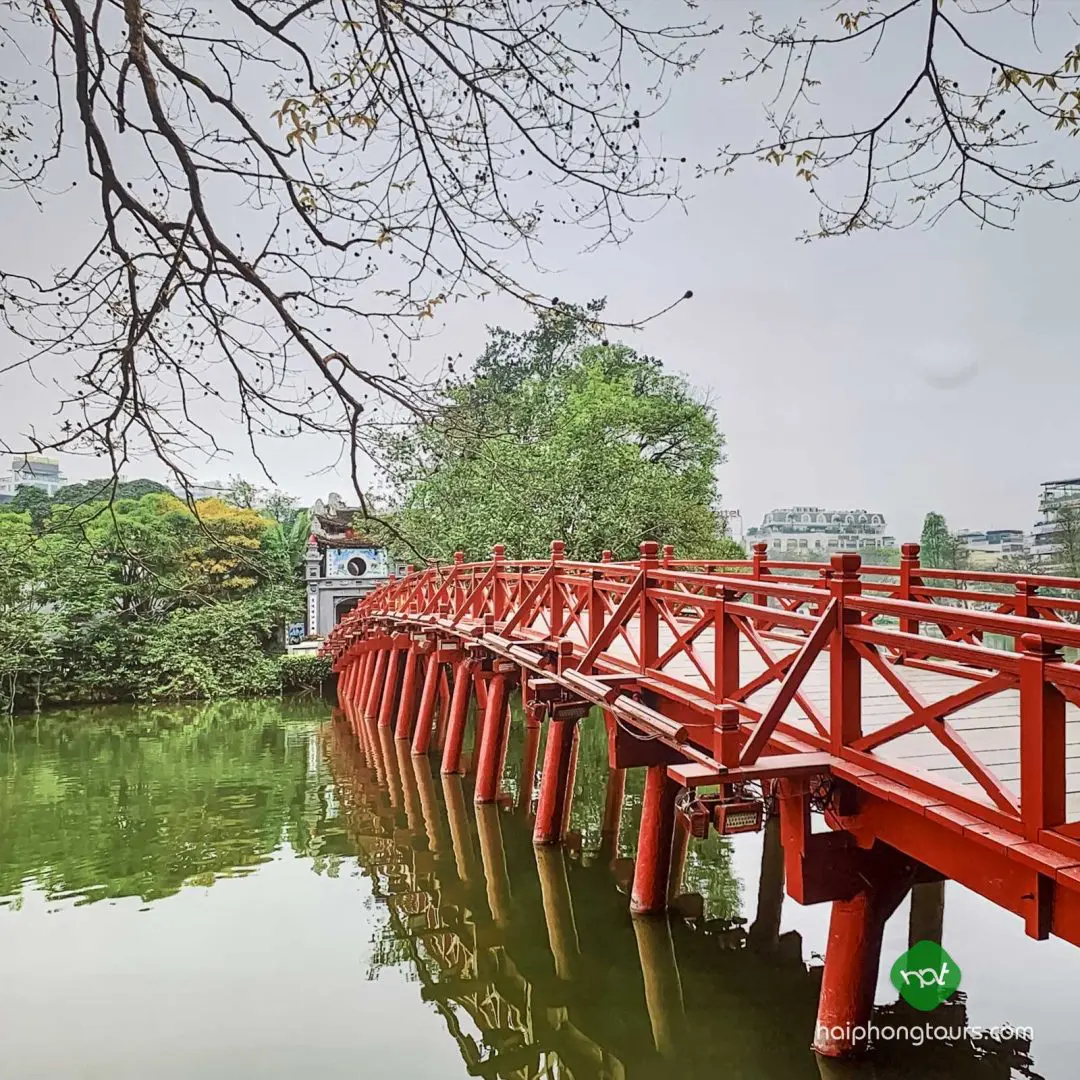
Plan a half day around Trang Tien, Ngo Quyen, Le Phung Hieu and Tong Dan, with a meal break and an optional museum session at 216 Tran Quang Khai. This is a street-level architecture outing, not a promise of access to government offices, hotel guest areas or closed monuments. It also complements rather than repeats the Old Quarter walking route north of the lake.
Start at the southern end of Hoan Kiem Lake
Use the junction of Trang Tien and Dinh Tien Hoang as the starting landmark. From a hotel in the Old Quarter, walk down the lake’s eastern side if the weather and your energy allow. If arriving by car, agree on a lawful nearby drop-off with the driver; do not choose the middle of the junction or assume vehicles can reach the lake during pedestrian restrictions.
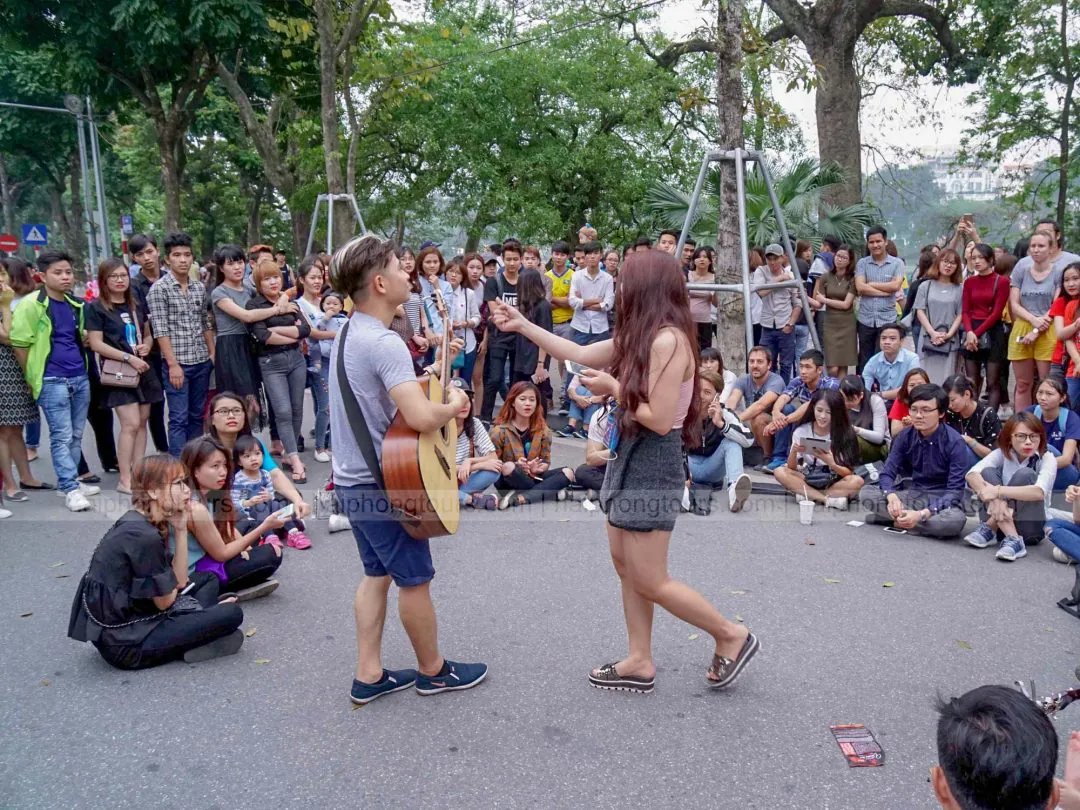
The French Quarter is a descriptive neighborhood rather than a ticketed attraction with one gate. The useful contrast is with the tight commercial streets to the north: here, look at building setbacks, upper-floor windows, tree cover and the relationship between monumental entrances and the road.
Allow roughly three to four hours for the version with lunch and a museum. That is a suggested sightseeing allowance, not the time needed simply to walk the streets. For a shorter outing, omit the museum and make the buildings and a cafe your focus.
A continuous walk through four streets
1. Follow Trang Tien toward Ngo Quyen
Walk east along Trang Tien, away from Hoan Kiem Lake. Pause where there is space on the pavement, then look above the shop signs. Comparing neighboring buildings is more revealing than photographing only one celebrated landmark: openings, cornices and later alterations show how a commercial street continues to change.
Keep the first section unhurried. A long list of architectural labels is not necessary to enjoy it. Choose one feature, such as shuttered windows or the depth of a covered frontage, and follow how it appears on different buildings. Avoid assigning an age or architect to an unlabelled facade simply because it looks colonial.
2. Turn onto Ngo Quyen for the Metropole frontage
The Sofitel Legend Metropole Hanoi is at 15 Ngo Quyen. View the street-facing hotel architecture from public space. The hotel remains a working property, so a photograph of the exterior is a different activity from visiting a restaurant, booking a hotel tour or entering guest-only corridors.
 Day Tour
Hanoi
Private Hanoi City Tour: Full-Day Highlights
 Day Tour
Hanoi
Hanoi City Group Tour
This is the most practical place on the route to decide whether you want a seated break. Making that decision now avoids reaching the museum hungry just as its midday closure begins. If you are only looking at the building, keep the entrance and luggage-handling area clear.
3. Continue along Le Phung Hieu toward Tong Dan
Use Le Phung Hieu for the next eastward section, then turn south onto Tong Dan to return toward the Opera House area. This small loop gives a different perspective from walking along Trang Tien in both directions. Street corners are useful viewpoints, but stop back from turning traffic rather than standing in the carriageway for a symmetrical photograph.
Not every attractive frontage is a visitor attraction. Where a building is occupied by an office or institution, the public pavement is the default viewing area. An open vehicle gate is not an invitation to enter a courtyard. If there is a security notice or a guard gives instructions, move on without photographing restricted details.
4. Finish the outdoor section at the Opera House
The historic Hanoi Opera House stands at the eastern end of Trang Tien, facing the August Revolution Square. Its classical composition, columns and roofline make it an important endpoint for understanding the scale of this part of Hanoi.
The historic Opera House is closed for restoration. Treat it as an exterior stop while works continue, with the possibility of screening or scaffolding. Do not buy an old interior-tour listing or build the day around a performance in this building without a new official reopening announcement.
Hanoi’s other concert venues are separate places. If live music matters more than architecture, use the Hanoi classical concerts guide to plan an evening independently of this walk.
Add the museum at the correct address
The National Museum of History has two well-known addresses that should not be treated as interchangeable. The historic building at 1 Trang Tien is temporarily closed for renovation. The museum has continued receiving visitors at 216 Tran Quang Khai.
For the museum extension, set the destination to the Tran Quang Khai site rather than following an old pin for Trang Tien. From the Opera House area, return toward Tong Dan and use the street grid toward the museum entrance. Check the crossing before moving onto Tran Quang Khai; its road frontage is not part of a pedestrian-only heritage precinct.
The museum publishes visiting sessions of 8 a.m.–noon and 1:30–5 p.m., closed on Mondays. Special notices can override the normal timetable. Ask at the ticket desk which galleries are open in the remaining site and what admission applies; do not assume a ticket currently includes access to the closed building.
A useful morning sequence is the street walk first, then a museum visit with enough time before noon. Alternatively, eat before the 1:30 p.m. session. For a Monday outing, choose the outdoor walk and lunch instead of arriving at a locked museum. The aim is a coherent half day, not squeezing an indoor stop into the last few minutes of a session.
Two genuine food stops on the route
La Terrasse, 15 Ngo Quyen: the Metropole’s street-side brasserie serves breakfast from 7–10:30 a.m. and its main food menu from 11:30 a.m.–10 p.m.; drinks run from 7 a.m.–10 p.m. Its published offering includes salads, sandwiches, pho and French desserts. This is the seated-meal choice, with hotel-restaurant pricing rather than street-food pricing. Read the menu and any service or tax notes before ordering.
L’Epicerie, 13 Le Phung Hieu: the hotel’s bakery and delicatessen publishes daily hours of 7 a.m.–9 p.m. It is useful for pastries or food to take away. Do not assume that a bakery purchase gives access to the hotel’s private spaces or that the shop is a substitute for a full seated lunch.
You do not need both stops. Choose a proper meal if continuing into the museum; choose a pastry break if returning to your hotel for lunch. Carrying food into a gallery is a separate question governed by the museum’s rules.
Adjust the walk for heat, rain or limited mobility
For hot weather, make the early outdoor section the priority and finish with one seated stop. In heavy rain, reverse the balance: travel directly to the open museum during its session, then add a short frontage walk only if conditions improve. A covered cafe is a more useful pause than waiting under an office entrance.
Wider streets do not guarantee continuous accessible pavements. Parked vehicles, uneven surfaces, crossings and individual entrances can interrupt the route. Anyone needing step-free access should establish the exact museum entrance and restaurant approach before relying on the full walking loop. Short taxi hops may be a more comfortable choice than attempting every block.
At the end, send your driver the actual museum or restaurant address where you are waiting. Avoid a vague message such as “near the Opera House,” particularly during road restrictions or restoration work. For a wider architecture journey, the North Vietnam architecture guide explains how Hanoi compares with Hai Phong and Ninh Binh.

Would you like help fitting a French Quarter half day between your arrival, hotel check-in and onward transfer? Contact Hai Phong Tours with your starting point, available time and walking preferences so we can help assess a workable sequence.