
A good Ha Giang trip with children is built around a suitable seat, predictable meals and nights that let everyone sleep. Start with those needs and choose the sightseeing afterward. You do not have to complete the standard Loop to give children a memorable mountain holiday.
For many families, a private car and fewer overnight bases are the most practical starting point. That is a planning choice, not a promise that every mountain road or property will suit every child. The child’s size, ability to sit comfortably, walking stamina and usual sleep routine matter more than a generic “family-friendly” label.

Choose the scale of the journey
A Ha Giang gateway stay with short local outings is different from a circuit through Dong Van and Meo Vac. A western stay around Thong Nguyen is another separate option, with terrace walks and hosted activities. Choose one main area unless you have enough days to include the transfer between them without sacrificing rest.
| Family priority | A workable starting design |
|---|---|
| Short outings and a regular bed | Several nights near Ha Giang, with one activity at a time |
| Plateau scenery | A private-car route with fewer stops and clearly spaced overnight bases |
| Village and nature time | A Thong Nguyen base with a locally guided short walk and a booked indoor activity |
| Older children who enjoy walking | A route selected by actual distance, ascent and return options |
Build a route that remains worthwhile if you skip the most demanding viewpoint. A child who enjoys a market or a tea demonstration may remember that more than a succession of long drives to scenic stops.
A private arrival day before the family itinerary
For a family arrival, compare the Hanoi to Ha Giang private transfer with the separate Noi Bai Airport to Ha Giang service if you are flying in. Both list an approximate six-hour route reference. Add time for arrival formalities where relevant, child care, meal stops and the final accommodation approach.
Send each child’s age, height and weight along with adults, suitcases and stroller details. A car described by its registered seat count is not a confirmation that the required child restraint and every bag fit together. Have the restraint and the usable seating arrangement checked before pickup.
Tell Hai Phong Tours in advance if you need a shorter interval between toilet or drinking-water stops. A private pickup can move around 30 minutes with advance notice through WhatsApp, which can help with breakfast and checkout. For a substantial change, update the whole arrival plan.
Keep the first Ha Giang evening for the room, dinner and sleep. The intercity transfer does not include a Loop tour, and starting the mountain route immediately after a long arrival day is not necessary to make the family trip worthwhile.
For the next stage, read arranging a small pickup-time adjustment.
Settle the vehicle and seat before paying
Give the transport provider each child’s age, height and weight, along with the number of adults and bags. Ask which child restraint can be fitted in the actual vehicle and whether it will be installed before pickup. The Vietnam child-seat guide explains the information needed for that arrangement.
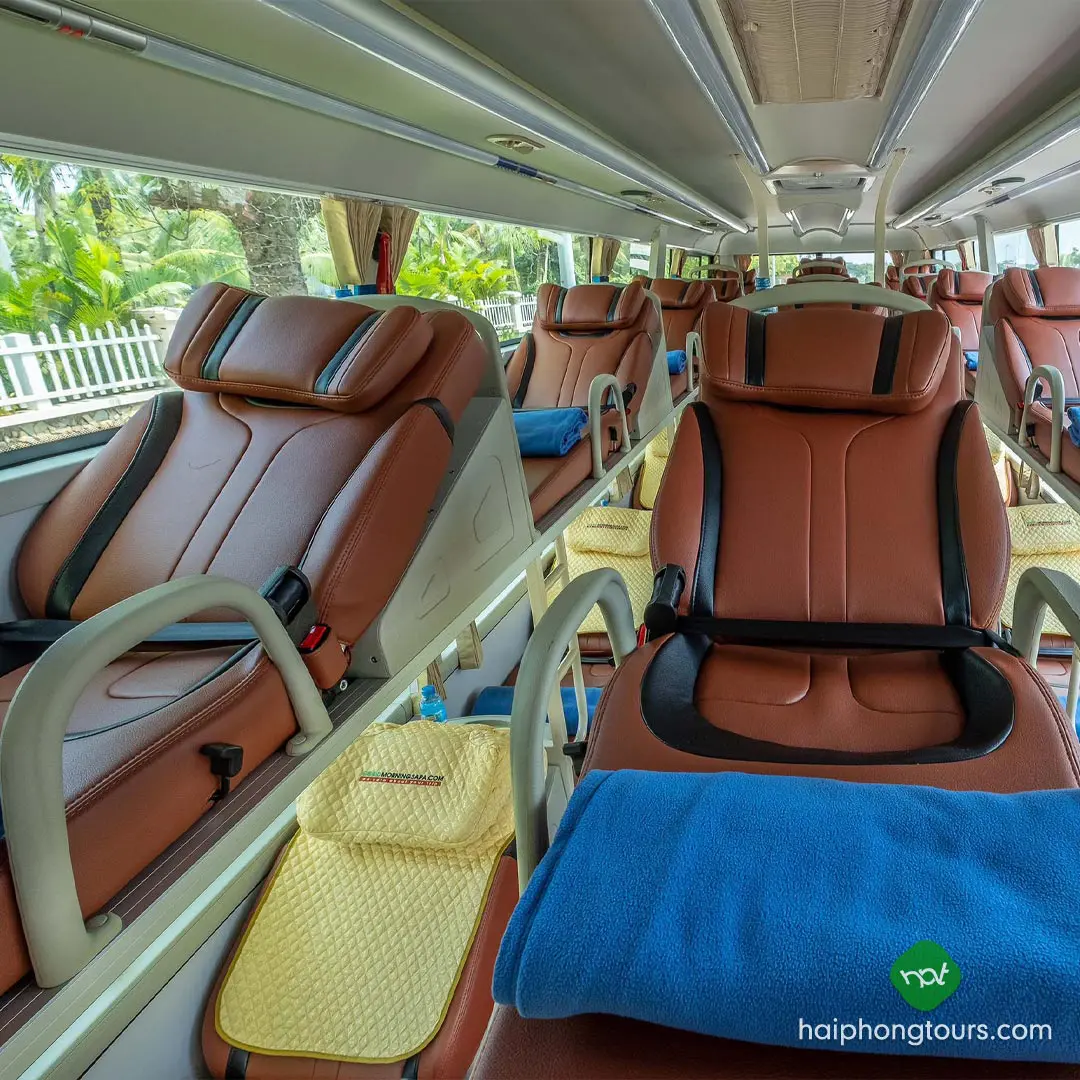
A passenger seat, a shared sleeper berth and a child restraint are different products. Do not treat a free or discounted child fare as confirmation of a suitable place to travel. Keep the child-seat arrangement separate from the local tour’s meal or room discount.
If anyone proposes a motorcycle segment, decide explicitly whether your family accepts it. A car itinerary should identify any attraction reached only by an additional ride or walk, with an alternative for those who decline. Do not improvise an unsuitable transfer merely to keep every advertised stop.
Book a room layout that matches bedtime
Specify beds, occupancy and bathroom access. An extra mattress may go on the floor; a “family room” may put everyone in one sleeping space. If adults want to read or talk after children sleep, a separate living area or two connecting rooms can matter more than the room’s total size.
Hmong Village’s Squad bungalow publishes two large beds and two bathrooms, with one bed in the living area and one in a bedroom. That is useful family information, but it should not be interpreted as two enclosed bedrooms.
Check the route between the room and the restaurant after dark. A hillside property may involve steps even when the room itself is spacious. Ask about balcony barriers, open water nearby and where luggage is carried, then choose a room location you can manage throughout the stay.
Plan a day with one main activity
A workable family day might combine a morning cultural stop, lunch and a free afternoon, rather than attaching a cave, summit, boat trip and long transfer to the same day. Keep the car accessible for a rest without assuming the driver can park beside every attraction.
In the Quan Ba area, compare a hosted village visit with the physical requirements of Lung Khuy cave. A cave visit should be chosen for the approach and steps as well as the underground scenery. There is no benefit in discovering the climb only after the family has committed to the stop.
For a western base, Panhou publishes tea, pastry and cooking experiences. Request an age-appropriate observation or supervised task rather than assuming every child can handle hot pans, tools or long preparation. A short food activity can fit a rest day better than an all-day walk.
Make food predictable without removing local flavour
Reserve dinner at your accommodation when arrival is late, and name the basic dishes the children can eat. Keep local tasting as an addition to a reliable meal rather than making hunger the moment to introduce every unfamiliar ingredient.
Use the Ha Giang food guide to recognise dishes, but give the kitchen specific ingredients to avoid when necessary. A shared table may use one serving spoon for several dishes. For significant allergies, make the kitchen’s ability to meet the requirement part of the booking decision.
Carry drinking water and familiar snacks for road sections. Plan toilet breaks before leaving a town or meal stop. If a child needs a particular food or feeding routine, buy supplies before heading into the more remote overnight area.
Leave room for a slower day
Keep a spare block in the schedule for rain, a tired morning or a change of plan. An extra night in one place can let one adult accompany an older child on a walk while the other stays near the room, provided both arrangements are agreed with the host and guide.
Do not make a long mountain-road day the unavoidable lead-in to a flight. Finish the regional trip with a realistic onward margin and a proper place to rest. The finished plan should protect sleep and comfort even when one optional activity is dropped.
Useful guides for your trip
Would you like help fitting this experience into your trip? Contact us with your travel dates, starting point, available time and group size. Tell us about walking limits or special interests so we can suggest a practical itinerary.